
Compounded GLP-1s: sourcing, shortage rules and what we won't do
Few areas of compounding have changed as quickly as GLP-1 therapy. Here is a plain-language summary of the rules, why sourcing matters so much, and the lines we will not cross.
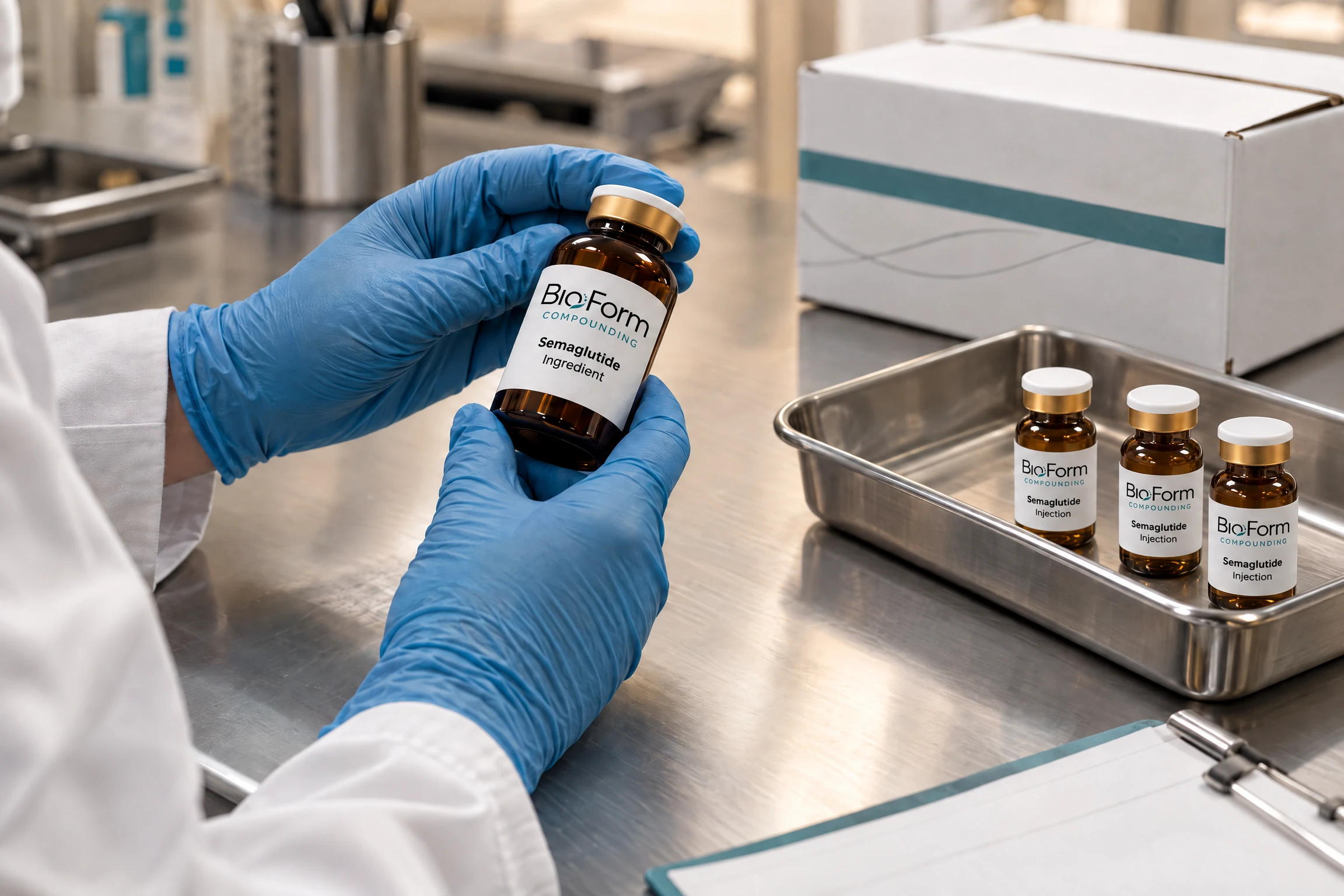
Between 2022 and 2025, compounded semaglutide and tirzepatide went from niche to everywhere — and then the rules shifted underneath them. If you prescribe weight-management therapy, it is worth understanding why.
Why shortage status mattered
Federal law generally does not allow pharmacies to routinely compound drugs that are essentially copies of commercially available, FDA-approved products. A drug on FDA's shortage list, however, is not considered commercially available. While semaglutide and tirzepatide were in shortage, that opened the door to widespread compounding.
FDA later determined both shortages had resolved — tirzepatide in late 2024 and semaglutide in early 2025 — and set transition periods that ended in 2025. Since then, compounding a preparation that is essentially a copy of an approved GLP-1 has been significantly restricted.
What that means today
Compounding can still be appropriate when a prescriber determines that an individual patient needs something the commercial product cannot provide — for example, a change in formulation that makes a clinically significant difference for that patient. That determination should be patient-specific and documented on the prescription. State rules apply on top of federal ones.
This area continues to evolve through FDA guidance, enforcement and litigation. Before prescribing, confirm current status with your pharmacy — we will tell you plainly whether a given preparation can be compounded for your patient.
Information here reflects our understanding as of October 2026. It is educational, not legal advice.
Sourcing is where the real risk lives
Demand for GLP-1s created a large market for active ingredient of uncertain origin. FDA has publicly warned about two problems in particular:
- Salt forms. Products made with semaglutide sodium or semaglutide acetate are not the same active ingredient as the approved drug, and FDA has said they should not be used in compounding.
- Research-grade material. Ingredient sold "for research use only" or "not for human use" is not manufactured or tested for patients, regardless of what its paperwork claims.
Patients deserve to know what they are injecting. That starts with where the ingredient came from.
What we won't do
- We won't use salt forms of semaglutide or any ingredient that is not the same active ingredient as the approved drug.
- We won't buy API from brokers or research-chemical vendors — only from FDA-registered manufacturers, with identity verified on receipt.
- We won't compound a copy of a commercially available drug without a documented, patient-specific clinical reason.
- We won't ship a sterile lot before potency, sterility and endotoxin results are back.
- We won't market compounded preparations as "generic" versions of brand-name drugs, because they aren't.
What we will do
- Tell you clearly, before you prescribe, whether a preparation can be compounded for your patient under current rules.
- Send the certificate of analysis with every lot, and the supplier documentation on request.
- Label every vial with concentration, lot number and beyond-use date.
- Support the rest of your weight-management protocol — see our weight-loss preparations.
Compounded medications are not FDA-approved and have not been evaluated by FDA for safety, effectiveness or quality.
Educational information for healthcare professionals and practice staff. Not medical or legal advice. Compounded medications are not FDA-approved.