
Compounding standards: what prescribers should actually care about
Every compounding pharmacy says it takes quality seriously. The useful question is how — and whether they can show you. Here is what actually separates a careful pharmacy from a risky one.
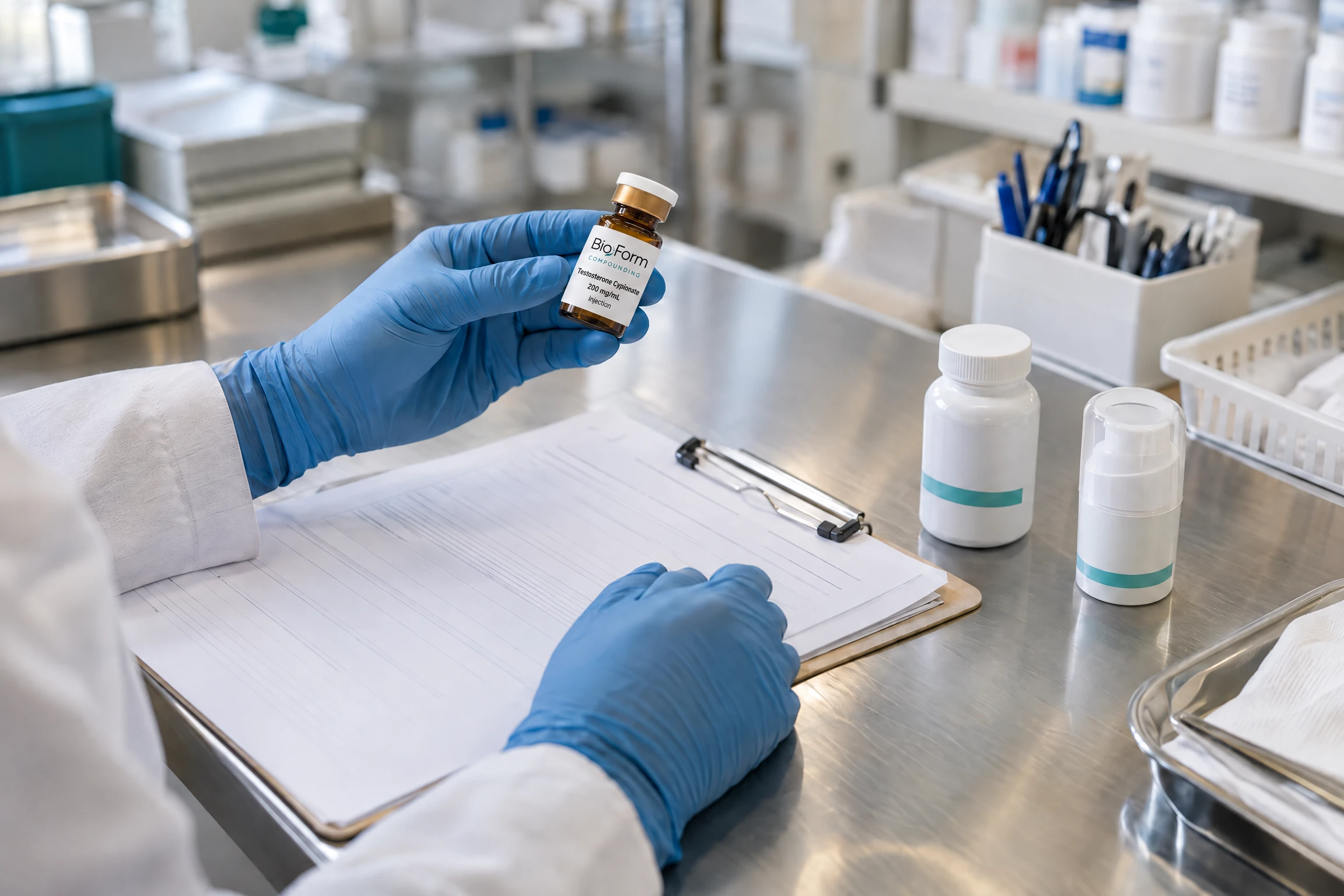
When you send a prescription to a compounding pharmacy, you are trusting a process you will never see. The patient sees a vial or a jar of cream; you see a label. Everything that determines whether that preparation is accurate, sterile and consistent happens before it ships. The good news is that most of it is documented — if you know what to ask for.
The three USP chapters that matter
The United States Pharmacopeia publishes the standards that govern how compounded medications are prepared. Three chapters do most of the work:
- USP <795> — non-sterile compounding. Capsules, creams, troches and oral liquids. Covers facility cleanliness, ingredient handling, formulation records and how long a preparation can be used (its beyond-use date, or BUD).
- USP <797> — sterile compounding. Injectables and anything else that must be free of microorganisms. Requires ISO-classified clean rooms, certified airflow hoods, routine air and surface sampling, and ongoing testing of staff technique. Revised chapters for both <795> and <797> took effect in November 2023.
- USP <800> — hazardous drugs. Many hormones, including testosterone and estradiol, are classed as hazardous because of reproductive risk. <800> requires containment rooms and handling practices that protect staff and prevent cross-contamination of other preparations.
A pharmacy that compounds sterile injectables should be able to tell you, without hesitation, which rooms each preparation is made in and how those rooms are monitored.
Beyond-use dates are earned, not assigned
A beyond-use date is not a marketing decision. Under USP <797>, how long a sterile preparation can be stored depends on how it was made and what testing supports it — the longest BUDs require additional safeguards, including sterility testing. If one pharmacy offers a dramatically longer BUD than another for the same preparation, ask what data supports it.
Where the ingredients come from
The quality of a compounded medication can never exceed the quality of its active ingredient. Ask:
- Is the active pharmaceutical ingredient (API) purchased from an FDA-registered manufacturer?
- Does every incoming lot arrive with a supplier certificate of analysis — and does the pharmacy verify identity on receipt rather than relying on paperwork alone?
- Does the pharmacy ever buy from brokers, or from vendors that label product "for research use only"?
The last question matters most for peptides and GLP-1s, where research-grade material is widely available and not intended for human use.
Testing: what, by whom, how often
"Tested" can mean almost anything. Pin it down:
- What is tested? For sterile preparations: potency, sterility and bacterial endotoxin. For non-sterile: potency at minimum.
- Who tests it? An independent third-party laboratory is a meaningfully different check than in-house testing.
- How often? Every sterile lot, or a sampling schedule? For non-sterile preparations, a documented rotating schedule is common and reasonable — as long as it is actually documented.
- Do results come before or after shipment? Sterility testing takes around two weeks. A pharmacy that ships sterile lots before results are back is accepting a risk on your patient's behalf.
Documentation you should be able to see
Every compounded preparation should be traceable through three records: a master formulation record (the recipe and method), a compounding record (who made this lot, when, with which ingredient lots), and the certificate of analysis for the finished lot. If a patient has an unexpected reaction, those records are how you find out whether the preparation was the cause.
Seven questions to ask any compounding pharmacy
- Which USP chapters does your facility follow, and in which rooms is my patient's preparation made?
- Where does your API come from, and how do you verify identity on receipt?
- Which preparations are tested by an independent lab, and how often?
- Do sterile lots ship before or after sterility results are back?
- Can I see the certificate of analysis for the lot my patient received?
- How do you justify the beyond-use dates on your sterile preparations?
- Who do I call with a clinical question — and will a pharmacist answer?
A pharmacy that welcomes these questions is usually one that has good answers. At BioForm, we publish our process for exactly that reason.
Educational information for healthcare professionals and practice staff. Not medical or legal advice. Compounded medications are not FDA-approved.