
Cypionate vs enanthate: carrier oils, kinetics and patient comfort
Testosterone cypionate and enanthate are the same hormone with a different ester attached. The differences are smaller than most patients assume — but the carrier oil and excipients can matter more than the ester itself.
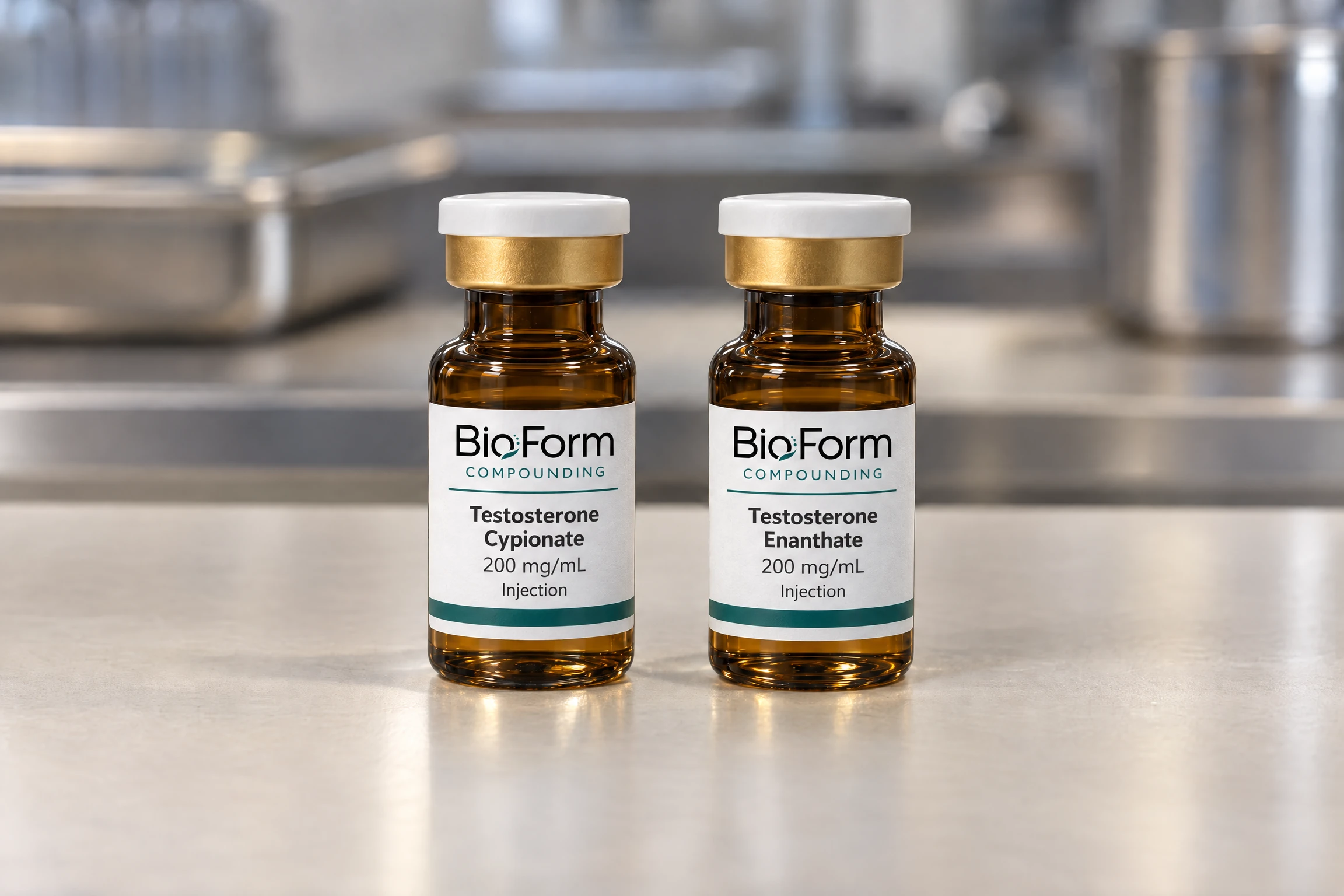
Same hormone, different ester
Both preparations deliver testosterone. The ester — cypionate or enanthate — is attached to make the molecule more oil-soluble, so it forms a depot in tissue and is released gradually. Once the ester is cleaved in the body, the testosterone is identical.
Reported elimination half-lives are roughly 4–5 days for enanthate and about 8 days for cypionate. In practice, the two are often treated as clinically interchangeable at the same dose and interval, and many prescribers see little difference in patient response.
A small difference in testosterone content
Because the esters have different molecular weights, a milligram of each does not contain quite the same amount of testosterone:
| Ester | Approx. testosterone by weight | Per 200 mg |
|---|---|---|
| Testosterone cypionate | ~70% | ~140 mg |
| Testosterone enanthate | ~72% | ~144 mg |
The gap is small, but it is worth keeping in mind when switching a patient from one ester to the other and reviewing follow-up labs.
The carrier oil
Testosterone esters are dissolved in oil. Commercial testosterone cypionate is typically supplied in cottonseed oil, and commercial enanthate in sesame oil. Compounding makes other choices possible, including MCT (medium-chain triglyceride) oil, a lighter, less viscous carrier that is free of common seed allergens.
- Allergies and sensitivities. Sesame is a recognized food allergen. Patients with sesame or cottonseed sensitivities may do better with an alternative oil.
- Viscosity. Thinner oils draw and inject more easily, particularly through finer needles. Patients who self-inject often notice this first.
- Post-injection soreness. Some patients report less discomfort after switching oils. Responses are individual, so it is reasonable to try an alternative when soreness is a complaint.
Excipients
Most testosterone injections also contain benzyl alcohol, a preservative that keeps a multi-dose vial safe between uses, and often benzyl benzoate, which helps keep the testosterone in solution at higher concentrations. Both can contribute to injection-site irritation in sensitive patients. Ask your pharmacy what is in the formulation, and whether an adjusted formulation is appropriate for a patient who reacts.
Practical tips for patients
- Store vials at room temperature. Testosterone in oil can crystallize in the cold; gently warming the vial in the hand usually redissolves it.
- Rolling the vial between the palms before drawing makes the oil flow more easily.
- Rotate injection sites, and follow the technique, needle size and route the prescriber has chosen.
- Note the beyond-use date on the label and discard the vial after it, even if medication remains.
How we prepare and test it
Injectable testosterone is where corner-cutting hurts most. Ours is compounded in a sterile environment and every lot is independently tested for potency, sterility and endotoxin before release, with the certificate of analysis shipped alongside. See our testosterone preparations.
This article is educational and is not a substitute for clinical judgment. Compounded medications are not FDA-approved.
Educational information for healthcare professionals and practice staff. Not medical or legal advice. Compounded medications are not FDA-approved.